

| |||||||||||||||||||||||||||
|
Home
About us Who We Are Statement of Faith Our Mission Contact Us ICWHP Studies Articles by Topic Scripture Study Word Study Women in History Bible Women Vignettes Biographies Healing Ministry Healing Words Dealing with Abuse Testimonies Letters Resources Online Books GWTW Blog Blog in Spanish Blog in Hungarian Recommended Books Recommended Links Site Search Site Map Newsletter Subscribe Archives Purchase Books About GWTW Available Books Join Us On 

| Verbal Abuse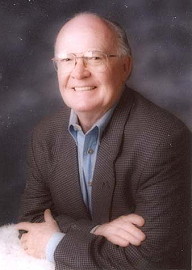
The secular world has "Dr. Phil,"
Dr. Jay Grady has revised his original book Stop Verbal Abuse. He has added more content and also changed the title to You Are A Door Prize Not A Doormat. Is verbal abuse worse than physical abuse? Unfortunately, the answer to that question, according to Dr. Jay, is Yes! Millions of hurting people, especially women, need to be set free from the effects of verbal abuse. Dr. Jay emphasizes that now is the time to spread an awareness of the seriousness of the problem. Dr. Grady's Spirit led counsel has the potential of forever changing its readers' lives, marriages, and other relationships. It addresses many issues regarding verbal abuse, including but not limited to, the following:
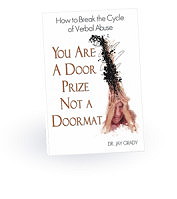
In his book, Dr. Jay introduces a therapeutic model he terms Word Therapy, which is used to help lead victims of verbal abuse into emotional, physical, and spiritual healing. A couple of endorsements among many state: "I know this book will do a lot of good for hurting people." Dodie Osteen--Lakewood Church. "You are a Door Prize, Not a Doormat is a must-read book. Dr. Jay identifies the characteristics of the abuser and ministers to the abused." Rev. Betty Tapscott --Tapscott Ministries. Jay Grady holds a Ph.D. in Christian counseling from Therapon University where he graduated with honors. He is a leading authority in the area of verbal abuse and verbally abusive relationships. Dr. Jay has been licensed and ordained for thirty-nine years. He has been involved in leadership positions of several churches, serving as an associate or senior pastor. His years of ministry, counseling hundreds of individuals, certainly qualify him as an authority in helping hurting people Dr. Jay is the Founder and CEO of Therapeia Publishing and Dr. Jay Ministries. He lives in Houston, Texas with his wife Sue, and they have four children and one grand-daughter. He and his wife Sue are co-founders of Healing Hurts Christian Counseling Center. WHAT IS VERBAL ABUSE? [1] by Dr. Jay Grady, Ph.D. We can define verbal abuse as words that attack or injure an individual, words that cause one to believe an untrue statement, or words that speak falsely of an individual. Verbal abuse constitutes psychological violence. Verbal abuse is damaging to the spirit. It takes the joy and vitality out of life. Although it would be impossible to estimate the number of individuals in verbally abusive relationships, we can assume that millions of people around the world are limited in their pursuits of happiness. Why? Because low self-esteem and lack of confidence can be a direct result of having been undermined by verbal abuse. A verbally abusive relationship can be compared to the story of the frog placed in a pan of water and placed on a stove. The fire under the pan is slowly increased. At first the frog swims around happy, with no worries in the world. As the heat increases, however, he becomes more and more uncomfortable until at last the heat is too much and he dies. The temperature of the water increases gradually, therefore the frog did not detect the problem early enough to do anything about it. Unless verbal abuse is dealt with early, the relationship may eventually die as well. The underlying premise of verbal abuse is control, which is a means of holding power over another. Unlike physical abuse, there are no outer signs of injury, like bruises, and black eyes. Broken bones may not exist but there will be damage. Let's take a moment and look at a classic example of verbal abuse and its focus on control, one of its primary characteristics. In January 1971, a television program aired that would become an overnight success and was one of the longest running television shows of all time. It would be one of America's favorite TV shows for years. The name of the show was All in the Family. America's families would sit in front of their TV sets and roar with laughter, as Archie, the head of the fictional Bunker family, would berate his poor wife, Edith, by steadily referring to her as "dingbat." He would also insult his son-in-law, Michael calling him "Meathead" and would put down his daughter, Gloria, for marrying Michael. No one went away untouched by his vicious mouth. We tried to label him a "bigot" and maybe he was, but a better name would have been a "Verbal Abuse Batterer." Even today the show is shown around the world and people continue to laugh at other's misfortune. The one thing that the producers of the show did bring out was that Edith was a person with low self-esteem and totally insecure. And just think we sat there and laughed, thinking it was funny. The next time you are sitting in front of the TV and watching your favorite show, try this, listen to see if there is any verbal abuse or control being used. Be alert to name-calling or put-downs. You will be surprised by what you see. During the years that All in the Family aired, they only had one episode where Edith had enough courage to leave Archie, but because of her low self-esteem and insecurity, she came back. Unfortunately, this is another characteristic of the verbally abused person. This show was and still is a sad commentary as to how far Americans and the world have drifted from what was once a fairly decent society to the place where we laugh at others pain. I am fully aware that this was only a TV show and the family was not real, but the theme and content of the show give one something to think about. In her book The Verbally Abusive Relationship, Patricia Evans states "verbal abuse is a kind of battering which does not leave evidence comparable to the bruises of physical battering. It can be just as painful, and recovery can take much longer. The victim of verbal abuse lives in a gradually more confusing realm." RELATIONSHIP ABUSE In the co-authored book, It's my Life Now, Meg Kennedy Dugan M.A. and Roger Hock, PhD. make this statement, "there is no single definition of relationship abuse. Each intimate relationship is unique and each abusive intimate relationship is unique too." However as you look back on your relationships, you will discover certain signs, clues and characteristics that will demonstrate clearly if the relationships are unhealthy or abusive. Two of these signs are common to virtually all cases of relationship abuse." First, relationship abuse usually involves a pattern of abusive events. Except in rare cases, a single incident usually does not constitute abuse. Instead, there is typically a pattern of repeated destructive behavior that escalates over time. Second, abusive relationships involve the use of power and control. The abuser's goal is to ensure that he or she is in complete control of you and the relationship. Their controlling tactics may be subtle and not easily recognized. It may seem that their taking control of your time, friends, and daily activities was a sign of caring and wanting only the best for you. As time went by, the control you once had over your life disappeared. Gradually using a wide range of strategies, they were able to render you totally powerless and place themselves in complete control of the relationship. Verbal abuse can be extremely painful and damaging and its effects long lasting. It could be termed a "SILENT KILLER." As with physical violence, verbal abuse can take many forms, but the goal is to change your self point of view. Verbal abuse is designed to make you feel powerless. One of its main focuses is to make you feel "worthless." Verbal abuse takes a tremendous emotional toll! Here is a partial list of behaviors that are included in verbal abuse.[2]
In the book Free Yourself From An Abusive Relationship Andrea Lissette, M.A. CDVC and Richard Kraus, Ph.D. the co-authors make the statement "We find abuse is like a thief in the night destroying, plundering and devastating its victims. It causes damage, destruction, emotional and physical pain, severe loss and disfiguration, and leaves lasting scars. Verbal abuse can creep into a relationship slowly as humiliating comments or devastating criticism: "You'll never understand this no matter how may times I explain it." "What are you doing this time, dummy?" "You look ridiculous!" Verbal abuse can be open and in-your-face or it can be subtle and devious. Verbal abuse betrays love, ends trust and destroys life." As common as verbal abuse is, many people are unsure whether they are being verbally abused. Many do not know what to do even if they become aware that they are being verbally abused. Abusers lie and manipulate their victims. They blame the victims for the abuse and they deny their abusive acts. Because of this and the danger involved, it is difficult for victims to confront the abuser in their relationships. THE IMPORTANT KEY HERE IS THAT THE VICTIMS RECOGNIZE THAT THEY ARE SUFFERING FROM VERBAL ABUSE.[3] 1. Dr. Jay Grady, You are a Door Prize, Not a Doormat, (Houston, Therepia Publishing 2003), 23-24 2. Ibid., 30 3. Ibid., 32 Return to Verbal Abuse 

|
|
| | |||||||||||||||||||||||